
What a full soil profile is telling growers across our southern regions this season
By Leighton Wilksch, Head of Dryland Solutions, Goanna Ag
Ask a grower on the Yorke or Eyre Peninsula how full their soil profile is right now, and you'll get an answer most haven't been able to give in a decade.
Across South Australia and Victoria, this dryland season has been shaped by one thing above all else. Rain that just kept coming. Not a single deluge, but steady, reliable falls right through the winter months, landing on top of warmer than average temperatures. The combination has done more for this year's crop than any input decision a grower could have made on their own.
What that's meant on the ground is a season that's felt different from the start. Many paddocks that growers are used to dry-seeding in late April or early May had enough soil moisture to germinate the seed straight away. That head start has carried through the whole season, and we're now seeing crops reach the reproductive stage weeks ahead of where they've sat in recent years. Pair that early development with a mild winter, and the growth we're seeing across the region is setting up some of the strongest yield potential in years.
The soil moisture probes are telling the real story
Our network of soil moisture probes and weather stations across the South has been tracking exactly what's happening under the surface all season, and the data backs up what growers are seeing in the paddock. The rain has infiltrated steadily down the profile, and crop roots are still only drawing from the upper layers. There's been no need to chase moisture at depth, because it simply hasn't been necessary. In parts of the Eyre and Yorke Peninsulas, soil moisture profiles are the fullest they've been in more than ten years, with water still sitting in some paddocks as we head into spring.
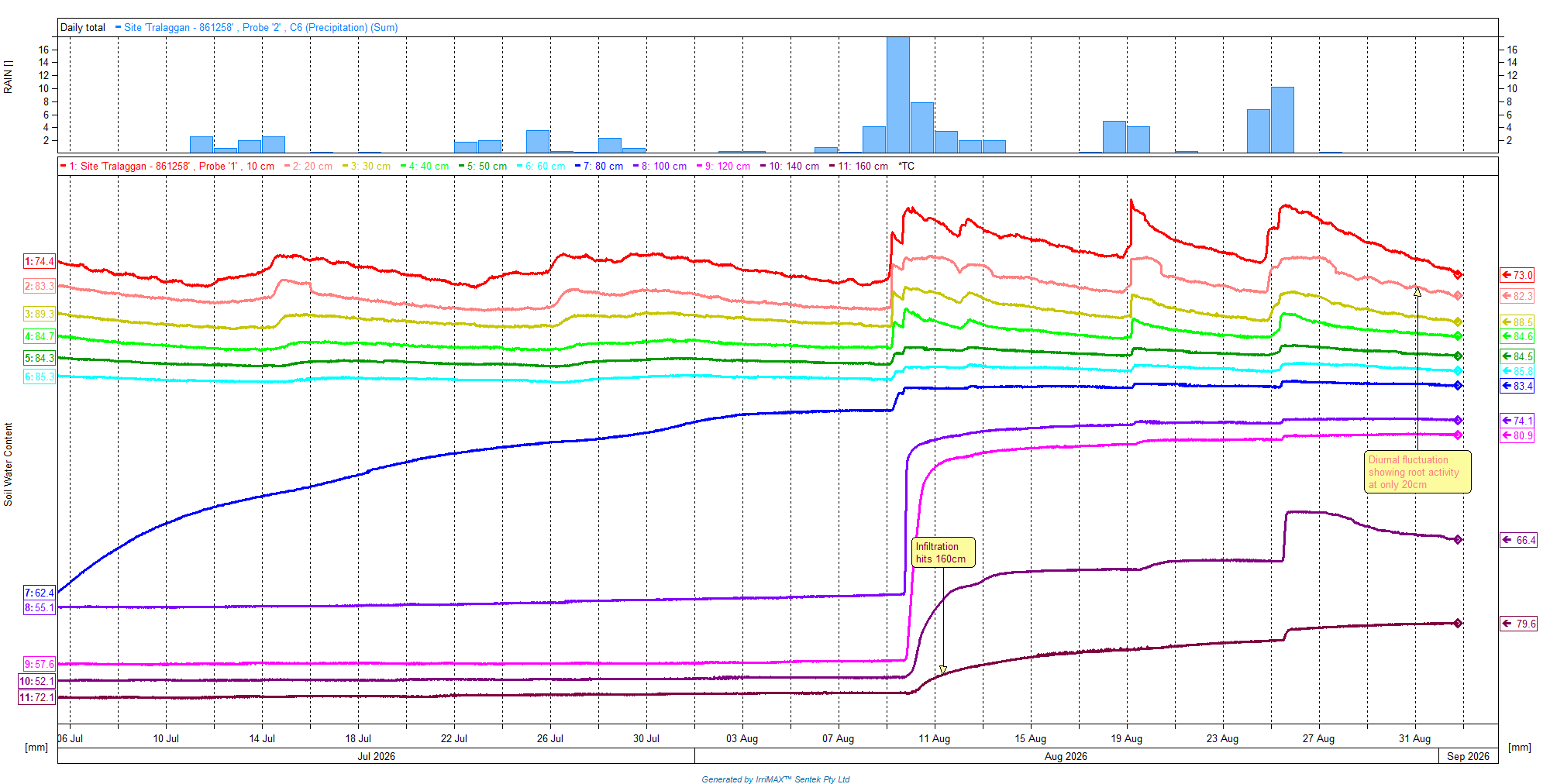
Figure 1: Data from our devices showing the rainfall and soil moisture correlation's when it comes to infiltration.
That's a remarkable position for a dryland region to be in. And it's exactly the kind of insight that only comes from having a probe in the ground, rather than relying on rainfall totals alone. Two paddocks can receive the same rain and behave completely differently below the surface, depending on soil type, slope and what's already stored at depth. The probes take the guesswork out of that.
Turning soil moisture data into decisions
This is where the value of the data really shows up, not in the reading itself, but in the decision it supports. For clients running soil moisture probes this season, the confidence to apply additional nitrogen over and above what was originally budgeted has come directly from what the data is showing. Being able to quantify infiltration and confirm that there's still ample moisture sitting below the root zone to fill grain, has given growers the evidence they need to back a bigger input decision.
That's a genuinely different conversation to the one growers were having in previous years, where every extra dollar of nitrogen carried real risk if the season turned dry. This year, for a lot of the South, the data is saying the moisture is there to support it.
It's canola, wheat and barley, the crops with the highest nitrogen demand, that are getting the most benefit from this level of insight. But the picture isn't uniformly positive. In some pulse paddocks, particularly lentils, the same wet conditions that have been a gift to cereals and canola have caused inundation and saturation in low-lying spots. Lentil roots can't survive in anaerobic soil, and we're seeing patches in some paddocks where the crop has simply died back. The soil moisture probes are picking up that sustained high moisture under the pulse crops clearly, and that data is now feeding into decisions about what goes into those paddocks next season, potentially crops better placed to make use of the residual soil moisture left behind.
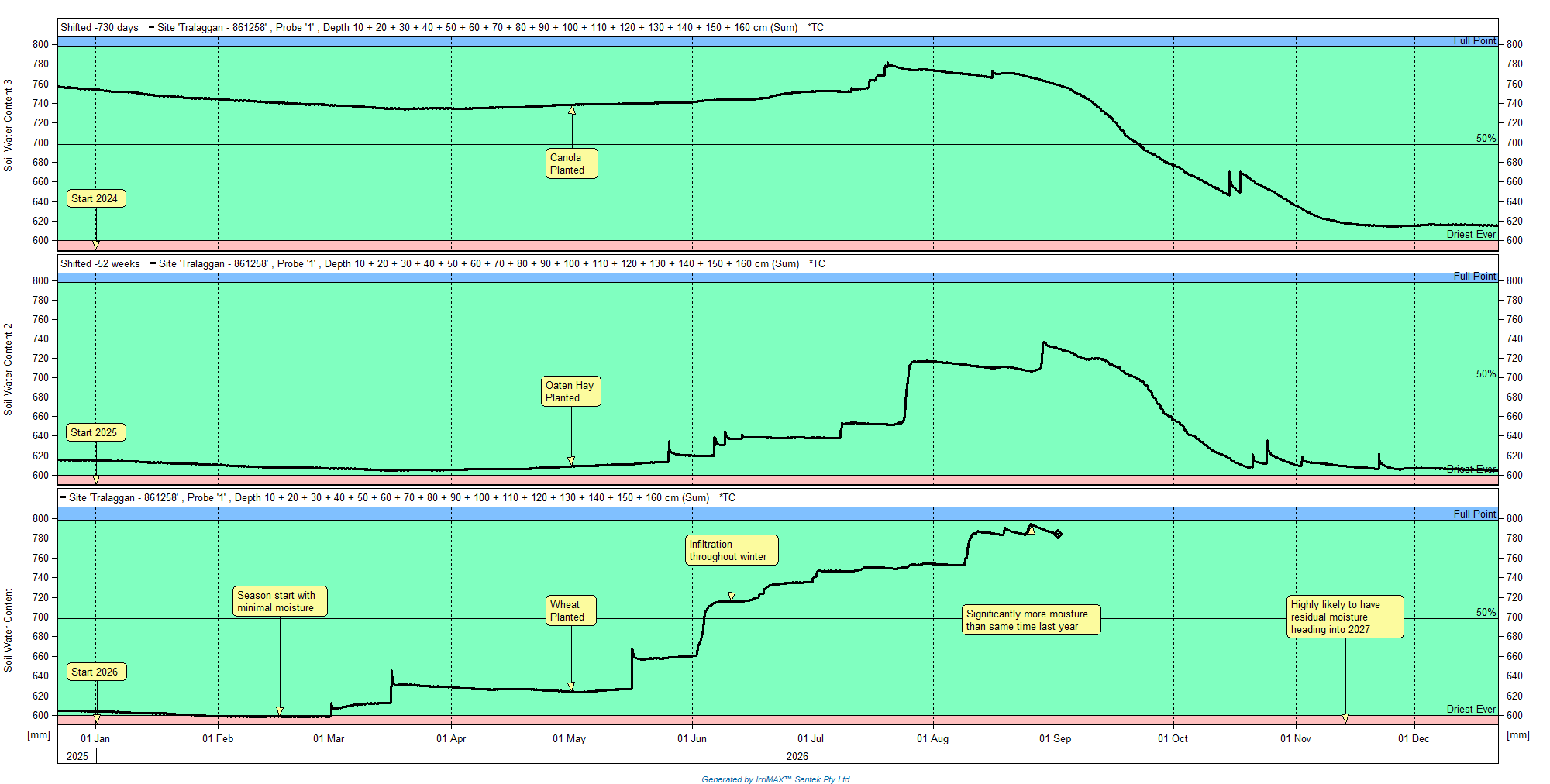
Figure 2: Three years of data from our devices across a canola, oat and wheat crop.
Dryland deserves the same rigour as irrigated
It's worth saying plainly: this kind of decision-making isn't reserved for irrigated systems. Dryland growers are managing the same pressure on margins, the same complexity in the paddock, and arguably more variability season to season than anyone. The difference this year is that more of them have had the data in hand to back their calls with evidence, rather than instinct alone.
That's been a big part of the shift for our business too. With AgByte now part of Goanna Ag, our combined network of soil moisture probes and weather stations across South Australia and Victoria is more comprehensive than ever, and it's giving dryland growers the same calibre of ground-truth, real-time insight that's long underpinned decision-making in irrigated cropping. The crop is different, the decisions are different, but the underlying job is the same: give growers a clear, honest picture of what's happening beneath their paddocks, early enough that they can still act on it.
This season across the South has been a good reminder of what's possible when growers can see what's happening in their soil, not just what fell from the sky. As harvest approaches, that visibility is proving just as valuable as the rain itself.